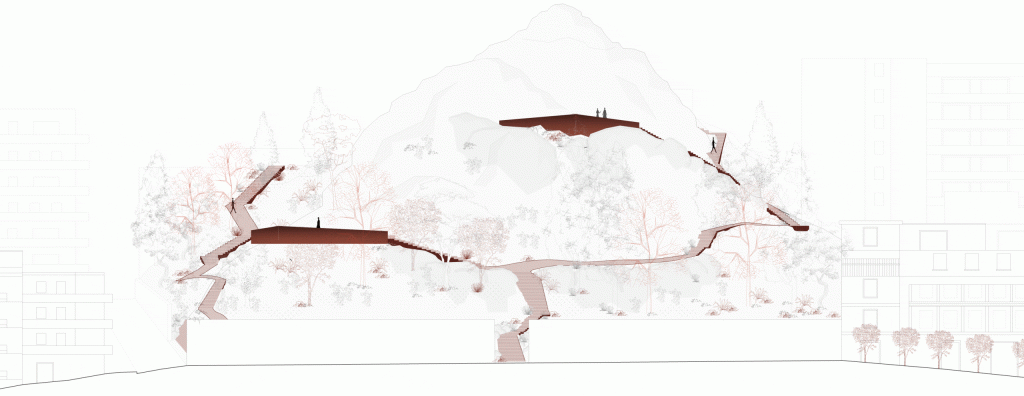
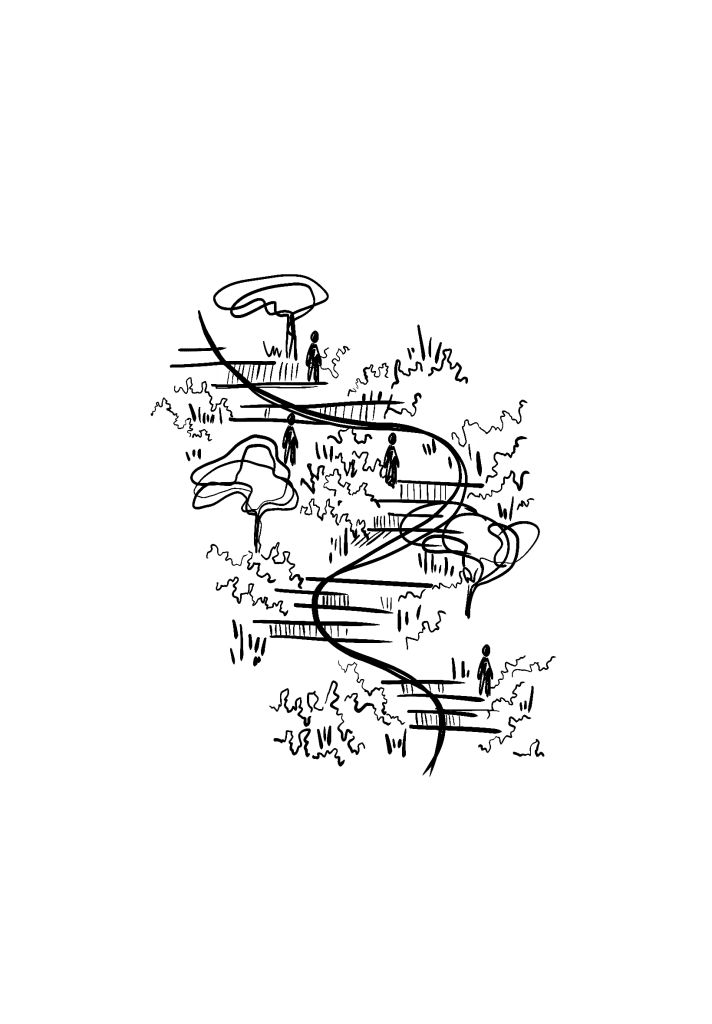
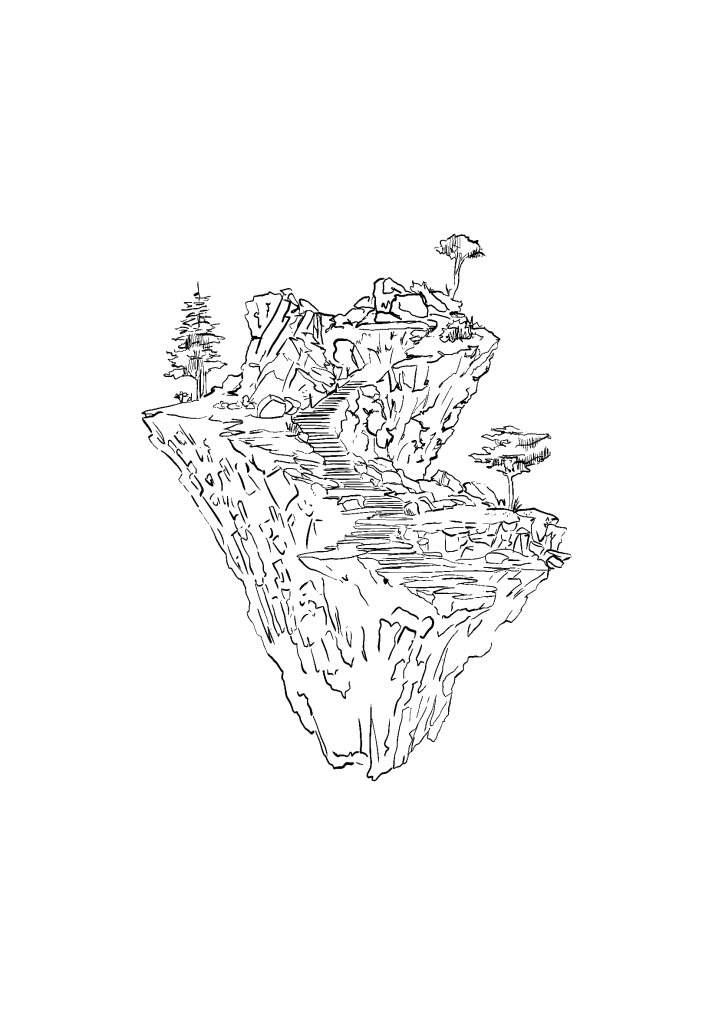
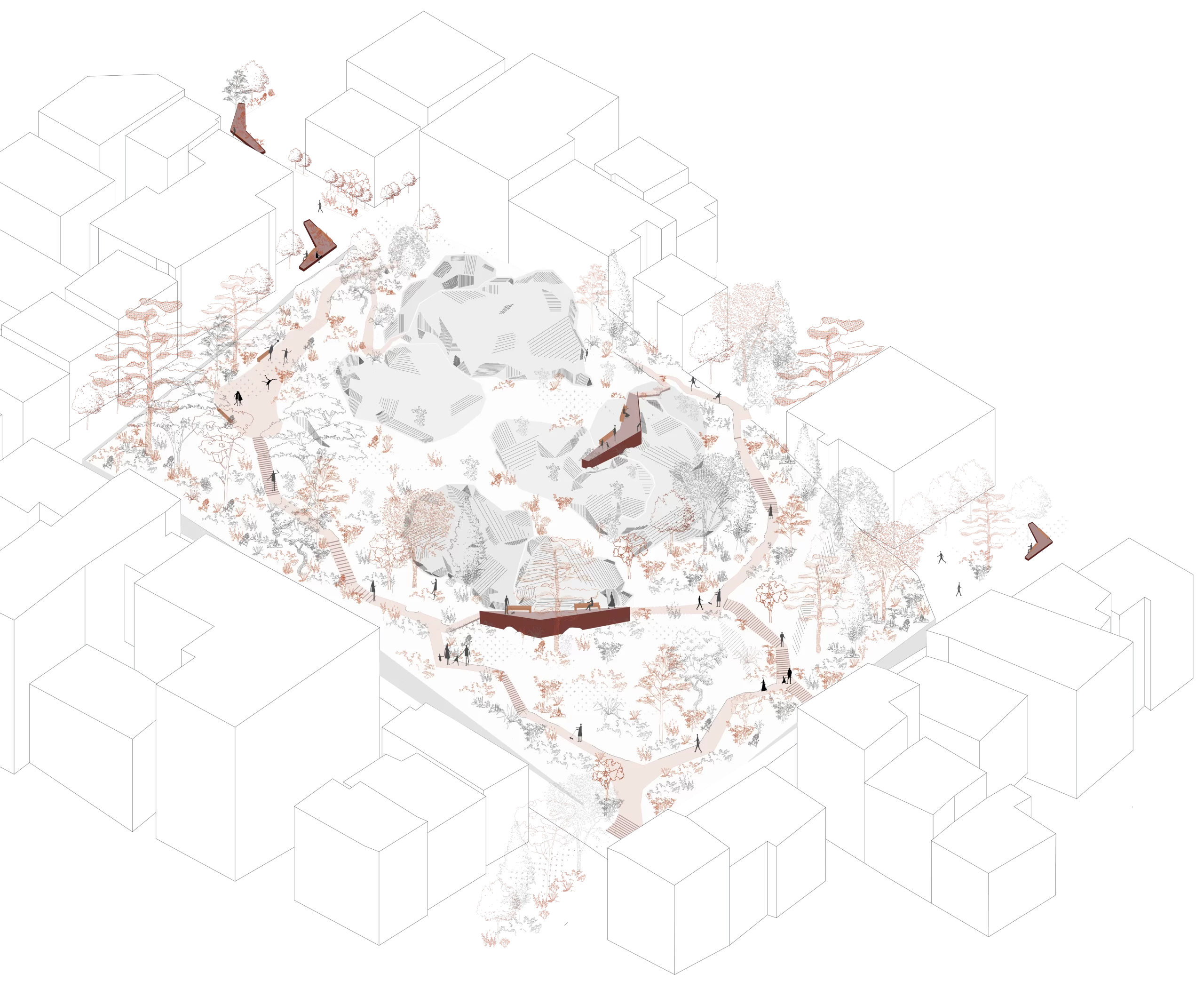
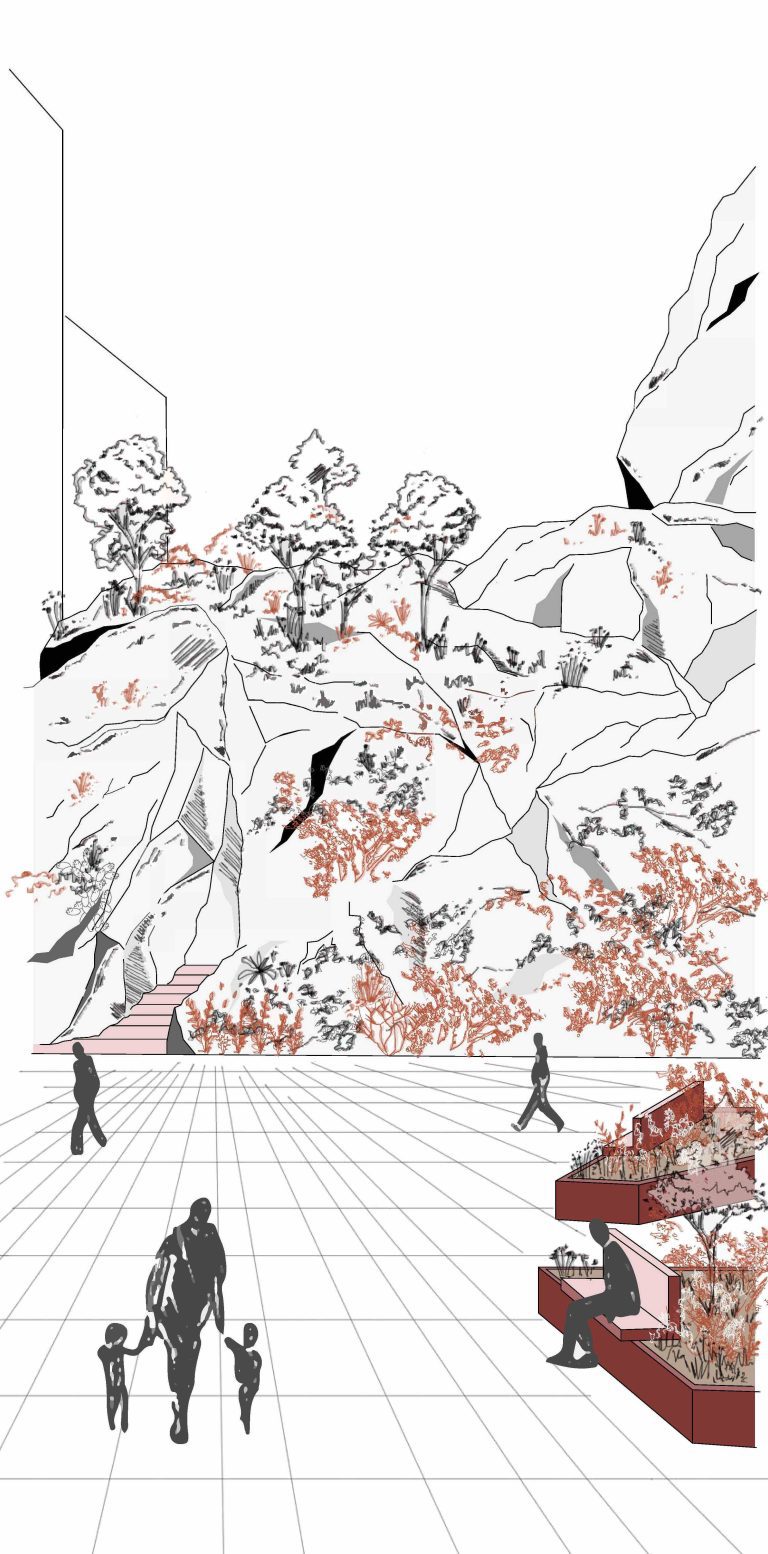
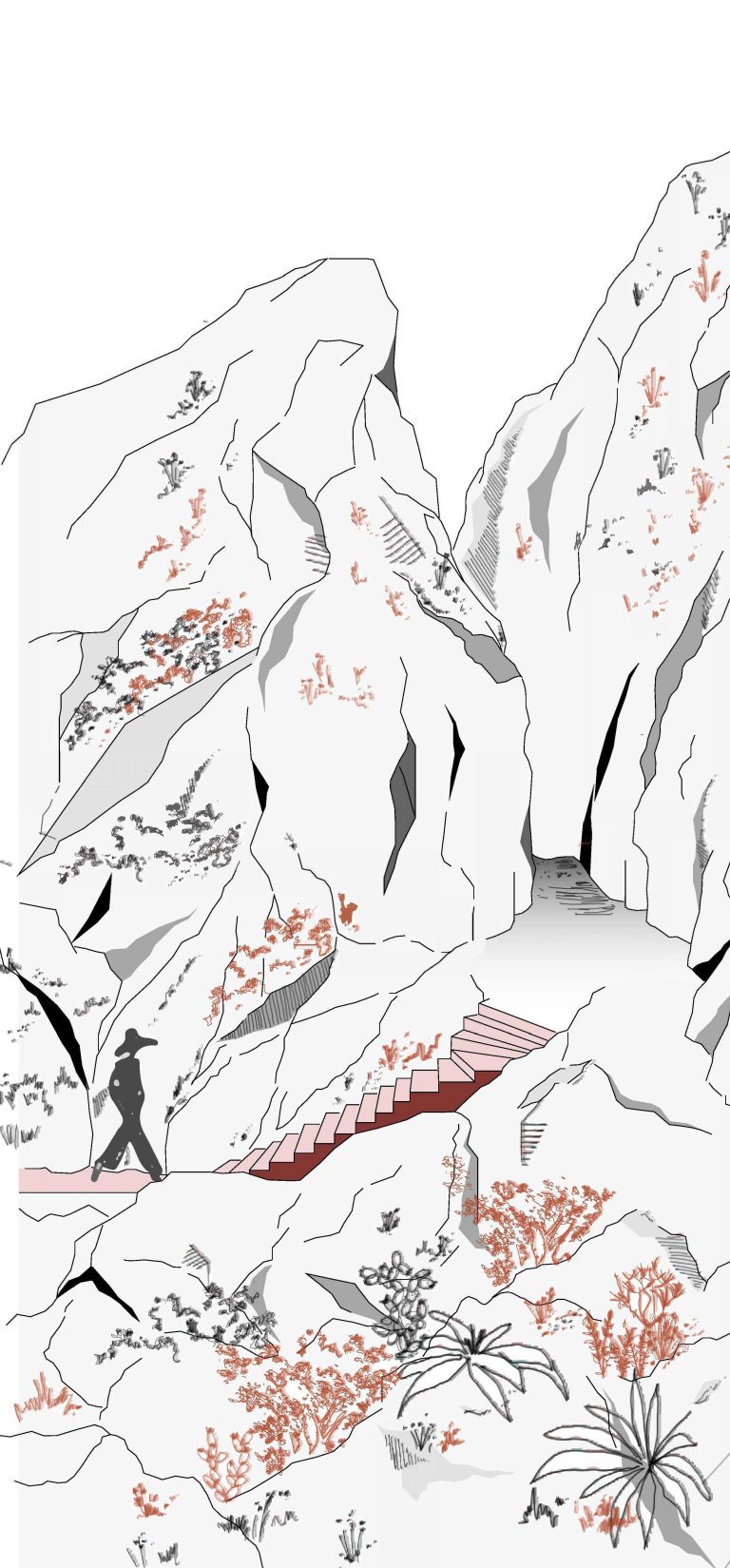
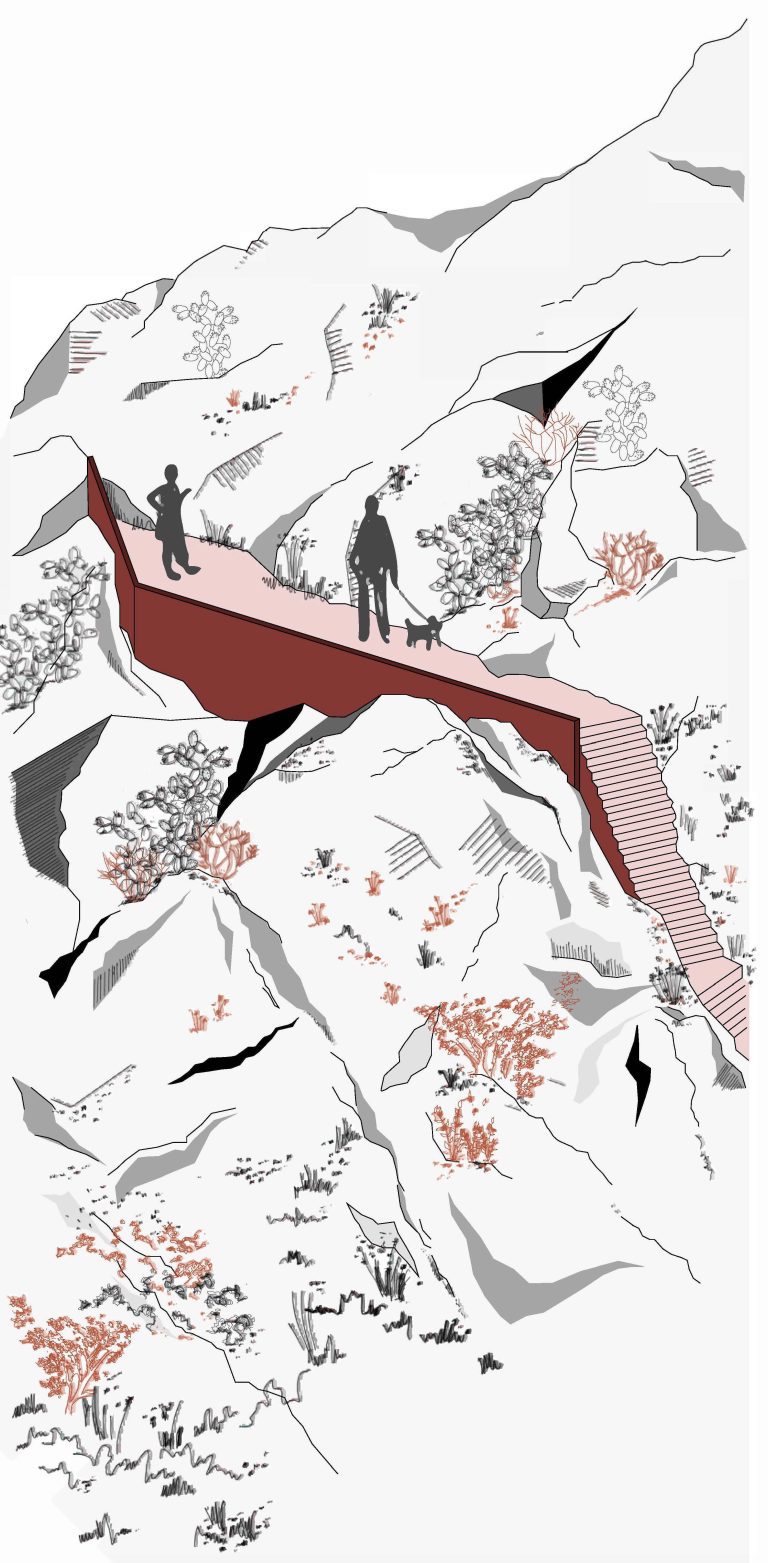
Towering above the city at the foothills of Lykabettus, the Torn Stone Park is designed as a refuge for the citizens of Athens. Evoking the image of an island floating above the neighborhood, its intimate character is shaped by a design that balances openness and enclosure. Resembling the structure of a private garden through a network of winding paths, viewing points, and the use of native vegetation.
Accessible activities encourage the neighborhood to stay in motion
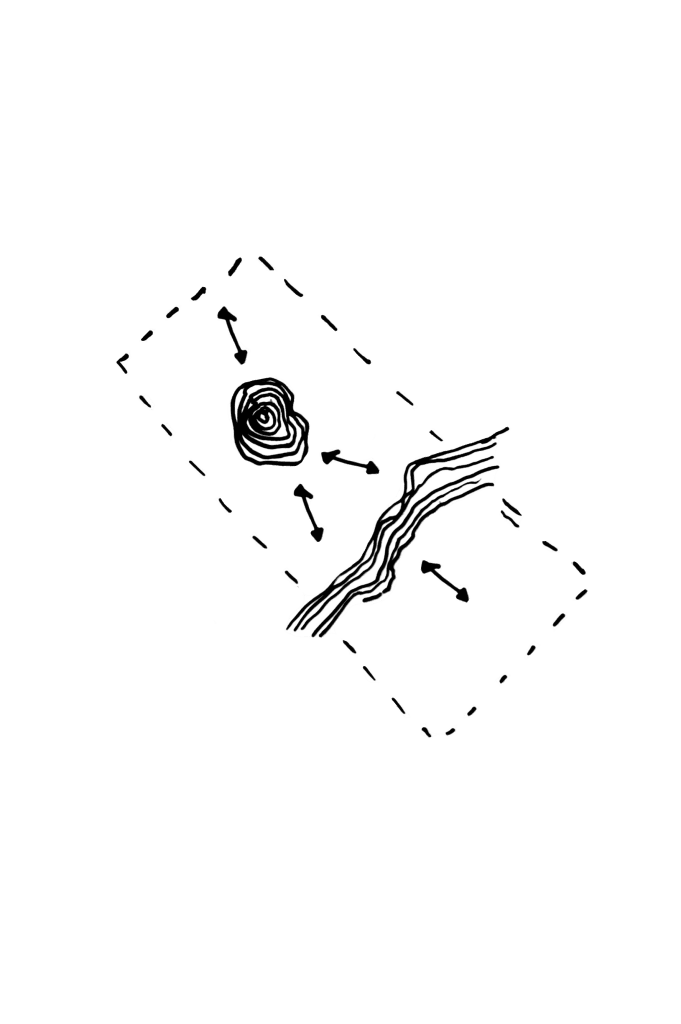
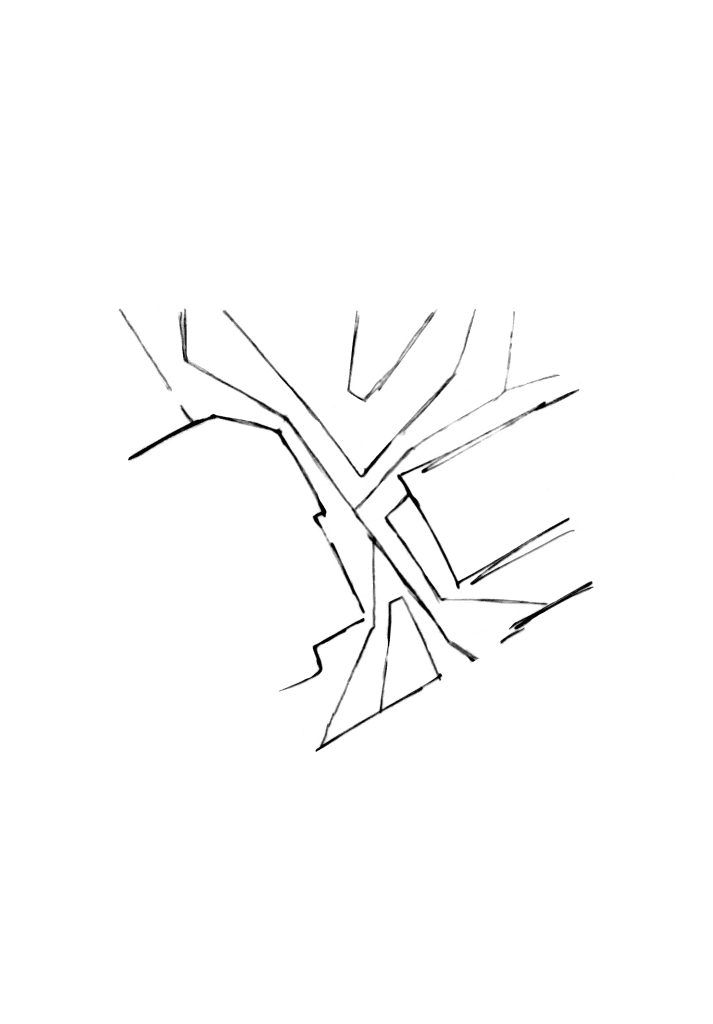
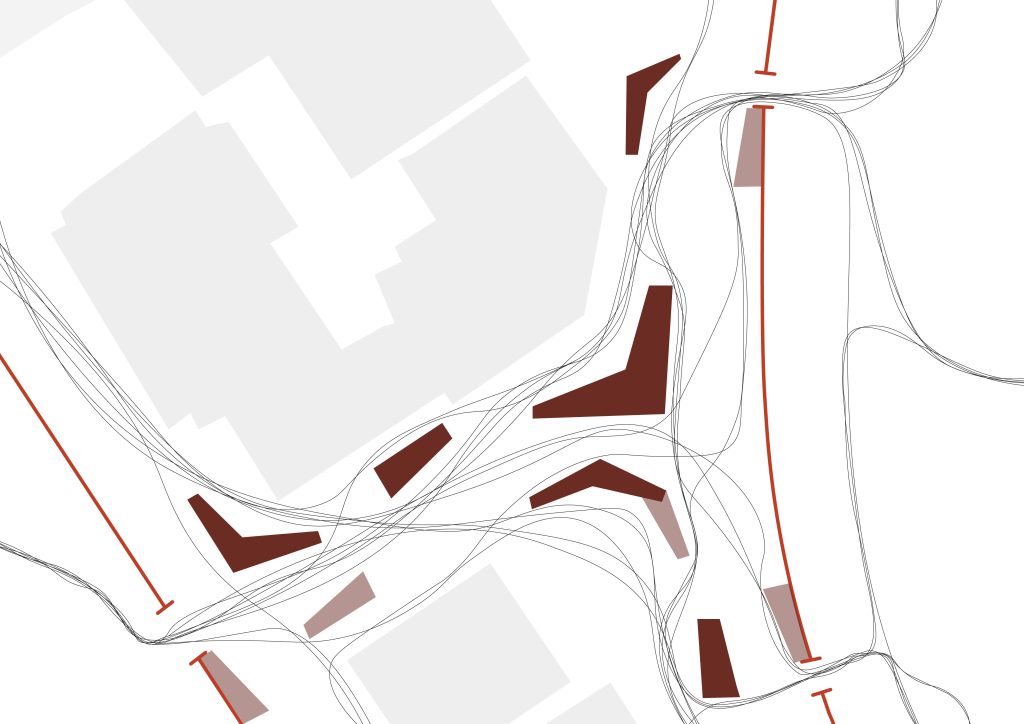
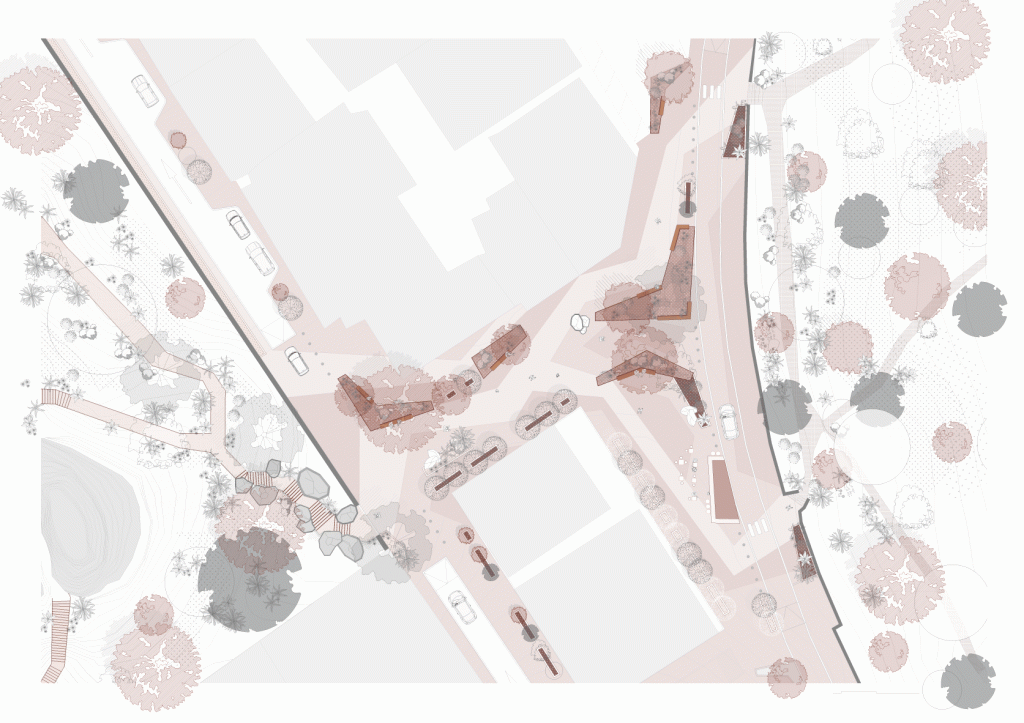
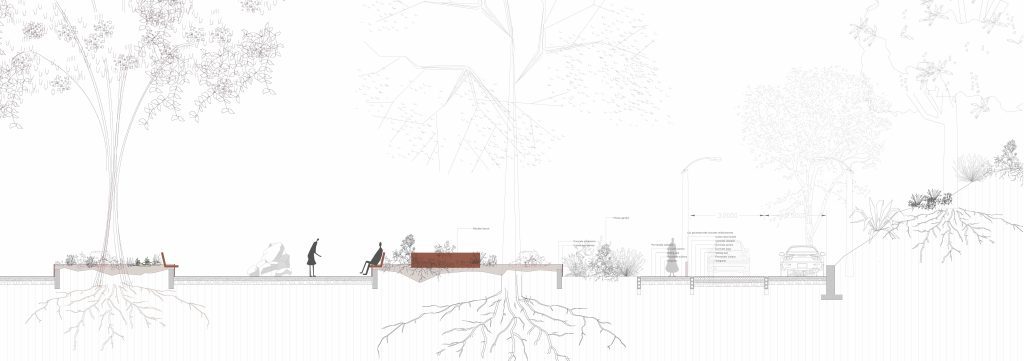
The goal of the urban design is to improve the quality of stay by creating a central plaza and connecting the Torn Stone Park with Lykabettus Hill. Pedestrians are prioritized, and habitual car-dominance is questioned. Elevated to a single level, the circular road becomes easily surmountable, while the pavement encourages people to cross freely. Wherever possible, the pavement is torn to make space for vegetation, shade, seating areas, and a café: creating a new public urban space for Athenians to gather and enjoy.
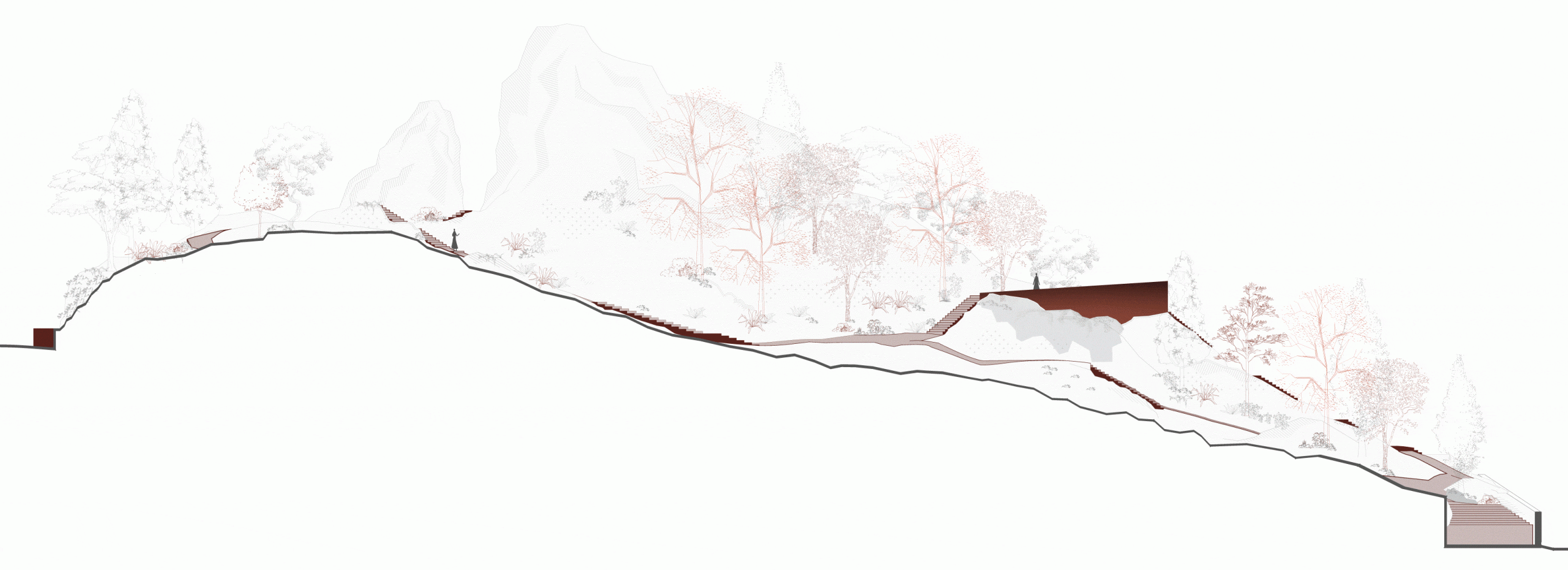
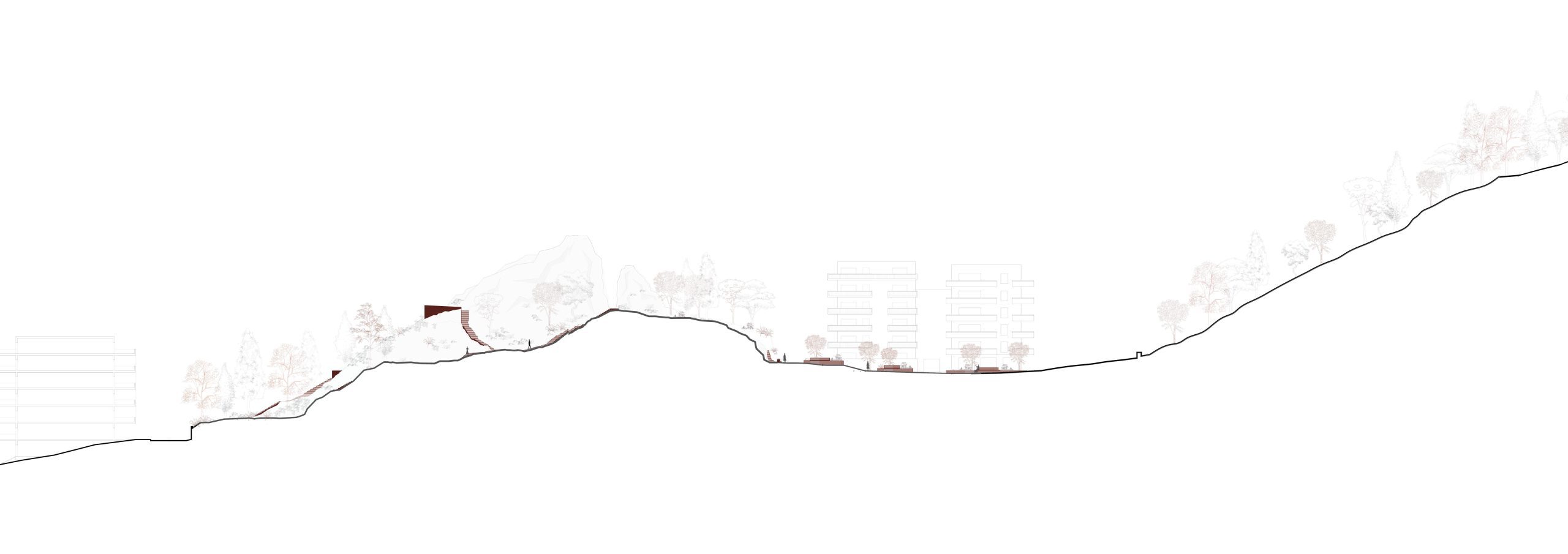
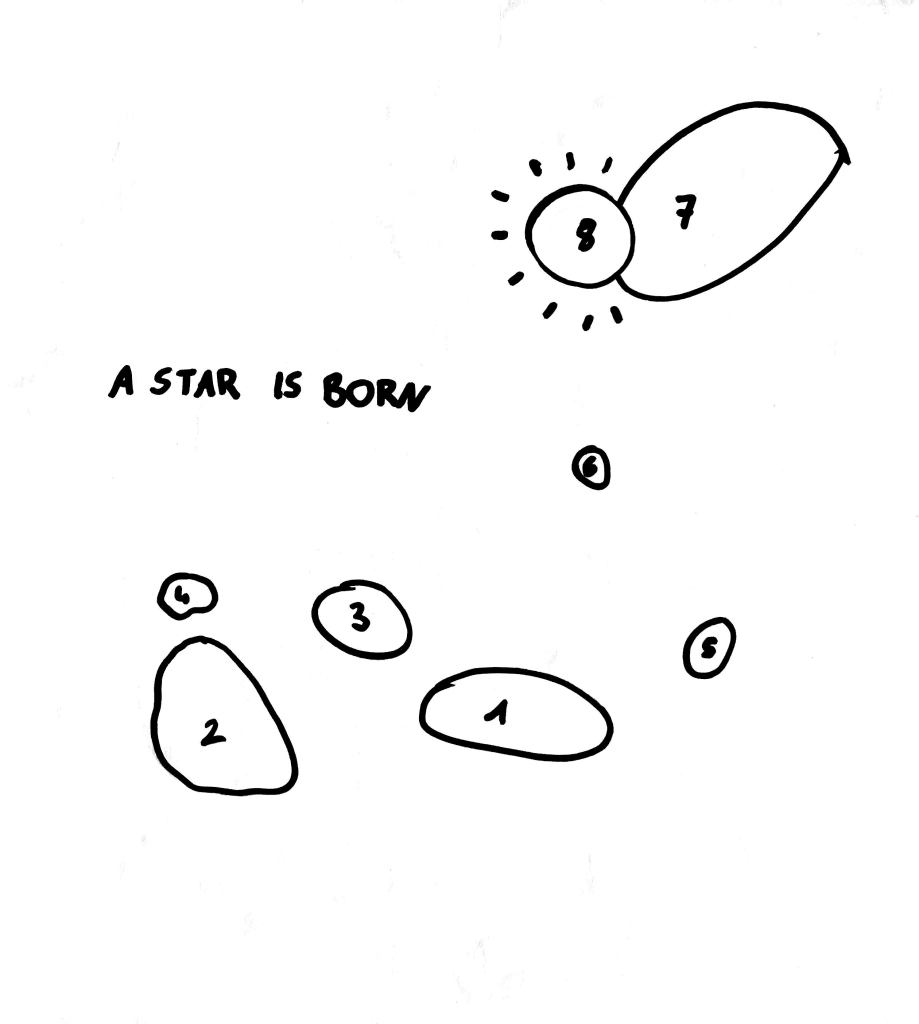
To reduce the project’s environmental impact, the paths follow the site’s natural topography. Stairs are carefully integrated by cutting into or filling the terrain with earth and stone. Native vegetation creates a shaded refuge – resilient to drought and inviting in character. As space for nature expands, the cross-section of the circular road is reduced: the eighth hill of Athens is born.
"Sarcopoterium spinosum"
"Agave americana"
"Opuntia ficus-indica"
Quality of space through native vegetation and human-scale design